
Microsoft Business Central Partner & Implementation: Transforming Business Operations with Smarter ERP

businesses need more than simple accounting and separate software tools to manage their growing operations. As companies expand, managing finance, sales, purchasing, inventory, supply chain, projects and customer information across systems can become complex and time‑consuming.

Microsoft Dynamics 365 Business Central offers an integrated ERP solution that helps businesses bring these processes together on a single platform.

However implementing an ERP system successfully needs planning, technical expertise process understanding and ongoing support. That is why choosing the Microsoft Business Central Partner is an important step for organizations looking to implement or upgrade their ERP system.

A professional partner can help businesses understand their requirements, configure Microsoft Business Central migrate existing data integrate applications, train employees and provide continuous support after implementation.
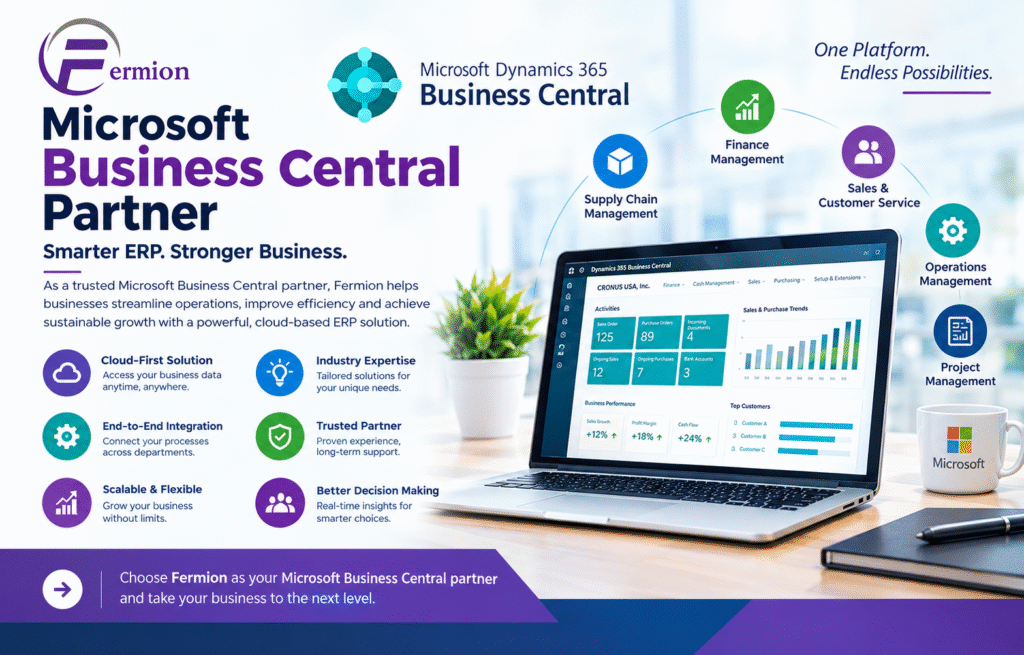
What Is Microsoft Dynamics 365 Business Central?

Microsoft Dynamics 365 Business Central is a cloud‑based ERP solution designed to help small and medium‑sized businesses manage their financial and operational activities more efficiently.

Of using separate applications for accounting, inventory, sales, purchasing and reporting organizations can manage these functions through one connected platform.

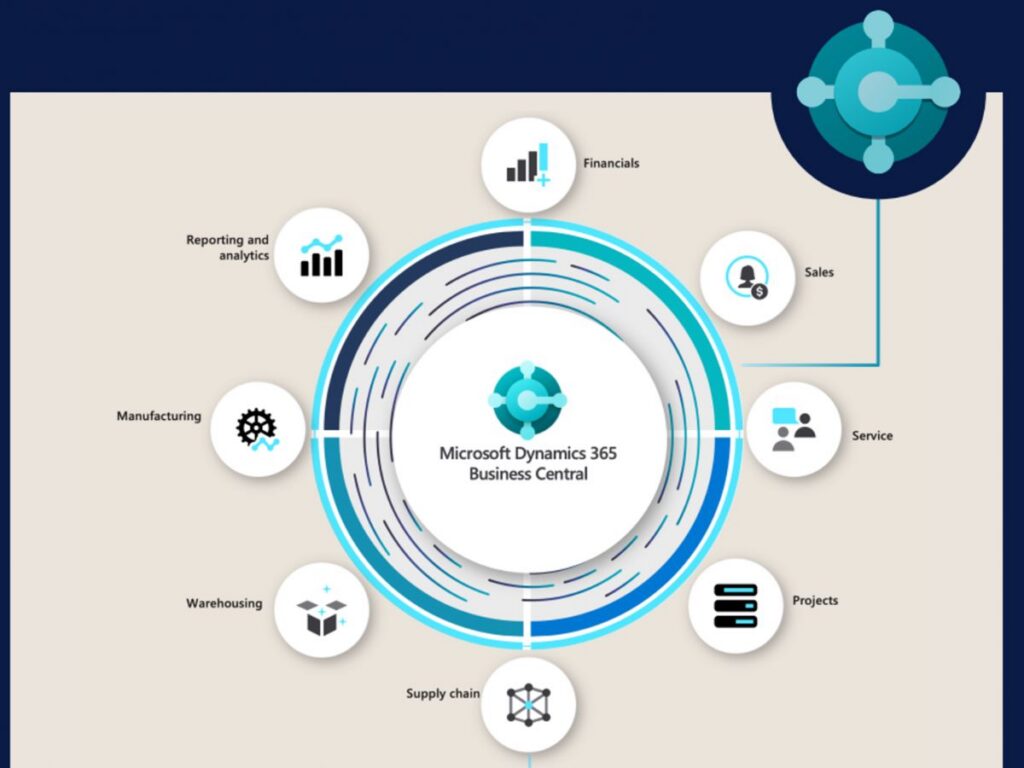
Business Central can help businesses manage areas such as:

• Financial management

• Sales and customer management

• Purchasing and vendor management

• Inventory management

• Warehouse operations

• Supply chain management

• Project management

• Budgeting and forecasting

• Business reporting and analytics

By connecting these functions businesses can improve visibility across departments. Make faster data‑based decisions.

Why Work With a Microsoft Business Central Partner?

An ERP implementation is not about installing software. It involves understanding how a business works and then designing the ERP system around those processes.

A reliable Microsoft Business Central Partner brings business expertise to the project. The partner works closely with the organization to understand its goals identify inefficiencies and develop an implementation strategy.

An experienced partner can assist with:

Business Process Consulting

Before implementing Microsoft Business Central it is important to understand existing workflows. A partner can analyze processes and identify areas where automation or improvement can deliver better results.

ERP Configuration

Microsoft Business Central offers standard functionality. A partner can configure the platform according to the organizations operational and reporting requirements.

Data Migration

Moving data from legacy systems is one of the critical parts of an ERP project. Partners can help clean organize, map, validate and migrate business information into Microsoft Business Central.

Extensions

Every business has requirements. Where standard functionality is not sufficient Microsoft Business Central can be extended through customizations and extensions.

System Integration

Businesses often use applications alongside their ERP. A Microsoft Business Central Partner can help integrate the ERP platform with CRM systems e‑commerce platforms, payment solutions, payroll applications and other business software.

Training and Support

Employee adoption is essential for ERP success. Partners can provide role‑based training and post‑implementation support so users can confidently work with Microsoft Business Central.

Microsoft Business Central Implementation: What Does It Involve?

A successful Microsoft Business Central Implementation follows a process. Every business has requirements but a typical implementation includes the following stages.

1. Requirement Gathering

The implementation begins with discussions between the business and implementation team. The objective is to understand systems, business challenges, workflows, reporting requirements and future goals.

This stage creates an understanding of what Microsoft Business Central needs to accomplish.

2. Solution Design

Once the requirements are documented the implementation team creates a solution design. This determines how Microsoft Business Central will be configured and how different departments will use the system.

The design may include finance, sales, purchasing, inventory, warehouse management, projects and other business functions.

3. Configuration

Microsoft Business Central is configured based on the approved solution design. This may include company setup, financial dimensions, chart of accounts tax settings, approval workflows, inventory parameters, user roles and other business settings.

A good implementation focuses on using Microsoft Business Central functionality wherever possible.

4. Data Migration

Businesses typically have information stored in their existing ERP, accounting software, spreadsheets or databases.

During implementation relevant data is. Prepared for migration. This may include:

• Customer and vendor records

• Product and item information

• Chart of accounts

• Opening balances

• Inventory records

• Sales and purchase information

• Outstanding transactions

Proper data validation helps ensure that the new ERP system starts with information.

5. Integration and Custom Development

If the organization uses business applications integrations can connect those systems with Business Central.

For example an organization may need Business Central to communicate with an e-commerce platform, a CRM system, a payment gateway, a warehouse solution or other specialized software.

Where required custom extensions can also be developed to support business processes.

6. Testing

Testing ensures that the system works as expected before employees begin using it in operations.

Implementation teams may test transactions, sales orders, purchase orders, inventory movements, approvals, reports, integrations and other important workflows.

User acceptance testing is particularly valuable because actual users can verify whether the system supports their day‑to‑day responsibilities.

7. Training and Go‑Live

Once testing is completed employees receive training based on their roles. Finance users, sales teams, purchasing staff warehouse employees and managers may require training.

After training and final validation the organization moves to the stage.

A reliable implementation partner continues to provide support during this transition to resolve issues quickly and ensure business continuity.

Key Benefits of Microsoft Business Central Implementation

A planned Business Central implementation can deliver significant benefits to an organization.

One Connected Business Platform

Business Central brings business functions together reducing the need to switch between disconnected applications.

Improved Financial Control

Finance teams can gain visibility into accounts, cash flow, receivables, payables, budgets and financial performance.

Better Inventory Visibility

Organizations can track inventory effectively and gain better visibility into stock movements, purchasing and sales.

Increased Productivity

Automation can reduce manual tasks and allow employees to focus on more valuable business activities.

Better Business Decisions

With accessible business information management can analyze performance and make informed decisions.

Scalable ERP Solution

As the organization grows its ERP requirements may also increase. Business Central provides a foundation that can evolve with changing business needs.

How to Choose the Right Microsoft Business Central Partner?

Selecting the implementation partner can have a major impact on the success of an ERP project.

Businesses should consider a partners:

• Business Central implementation experience

• Microsoft expertise

• Industry knowledge

• Consulting capabilities

• Data migration experience

• Integration and customization skills

• Training approach

• Post‑go‑live support

• Project management methodology

• Understanding of business requirements

It is also important to discuss the project scope, implementation approach, estimated timeline, support model and responsibilities before starting the project.

Why a Proper Implementation Strategy Matters

Even a powerful ERP platform can fail to deliver expected results if it is poorly implemented. Businesses should avoid customization and focus on creating processes that are efficient, scalable and easy for employees to follow.

A strong implementation strategy should combine technology with business objectives.

The goal should not simply be to move existing processes into a system.

Instead organizations should use the implementation as an opportunity to improve workflows, repetitive tasks eliminate unnecessary manual work and create better visibility across departments.

Frequently Asked Questions

What is a Microsoft Business Central Partner?

A Microsoft Business Central Partner is an organization that helps businesses plan, implement, customize, integrate and support Microsoft Dynamics 365 Business Central.

Why is a partner important for Business implementation?

A partner provides business expertise throughout the ERP journey. They can help with requirements, configuration, data migration, integrations, testing, training, deployment and ongoing support.

How long does Microsoft Business Central Implementation take?

The implementation timeline depends on the organizations size, number of users, modules, data migration requirements, integrations, customizations and overall project complexity. A detailed assessment is required to determine the timeline.

Can Business Central integrate with existing business applications?

Yes. Business Central can be integrated with business applications and platforms. The exact integration approach depends on the systems involved and the organization’s requirements.

Can Business Central be customized?

Yes. Business Central provides configuration options well as extensions and development capabilities, for businesses that require additional functionality.

Can existing ERP data be migrated to Business Central?

Yes. Relevant data from existing ERP systems, accounting software, spreadsheets and databases can be migrated after data cleansing, mapping, validation and testing.

Is Business Central for growing businesses?

Yes. Business Central is designed to support medium-sized organizations and can offer a scalable platform as business operations expand.

What support is available after implementation?

Post-live support may include troubleshooting, user assistance, system optimization, additional training, enhancements, integrations and ongoing maintenance.

Conclusion

An experienced Microsoft Business Central Partner can help organizations plan and execute the implementation journey from initial requirement analysis and solution design to configuration, data migration, integration, testing, training and post-go-live support. With a planned Microsoft Business Central Implementation businesses can reduce manual processes improve operational visibility increase productivity and build a stronger foundation, for future growth. For organizations looking to streamline their operations and adopt an ERP environment Business Central combined with the right implementation partner can become a valuable long-term business solution.
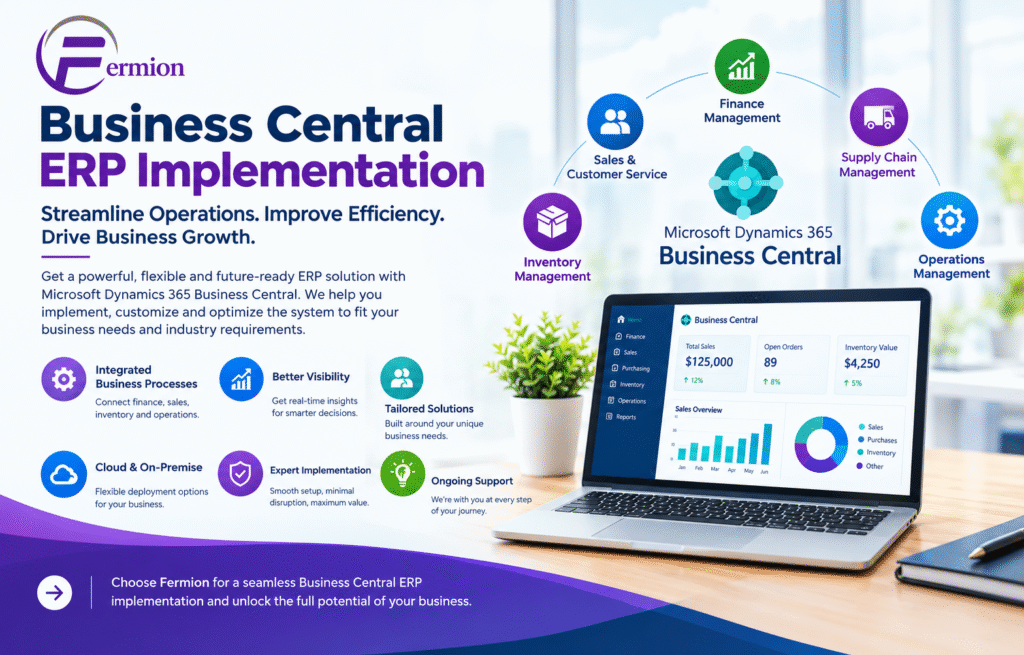
Business Central ERP Implementation: Choosing a Microsoft Dynamics 365 Partner in India

In today’s business world companies need more than just basic accounting software to handle their work properly. Companies need an ERP solution that can link finance, sales, buying, stock, supply chain, projects and customer relationships in one single system. Microsoft Dynamics 365 Business Central is a cloud-based ERP system made to help small and medium-sized companies make their work better and make smarter business choices.

Making an ERP system work well needs good planning setting up the system moving data training people and help after it is done. This is why choosing the Business Central ERP Implementation partner is very important. A strong Microsoft Dynamics 365 Partner India can help companies put in Business Central according to their needs and make the move from old systems easier.

What Is Business Central ERP Implementation?

Business Central ERP Implementation is the process of putting Microsoft Dynamics 365 Business Central into a company and changing it to fit the company’s way of working.

Implementation usually has main steps, including:

• Analyzing business processes

• Checking what the ERP system needs

• Configuring the system

• Moving data

• Connecting with programs

• Changing the system and adding new parts

• Testing with users

• Training employees

• Planning for going live

• Support after the system is in use

A good partner helps companies avoid common ERP problems and makes sure the new system meets the companys goals.

Why Choose Microsoft Dynamics 365 Business Central?

Microsoft Dynamics 365 Business Central gives a system for managing different parts of a business. Of using separate tools for money, stock, selling, buying and working companies can handle all these parts in one ERP system.

Main advantages are:

1. Financial Management

Business Central gives tools for managing ledgers paying bills getting money, budgeting, cash flow, fixed assets and financial reports. Companies can see their money situation better. Make better choices.

2. Inventory Management

Companies can check stock levels track items and improve buying choices. Clear stock view can help lower extra stock and improve order delivery.

3. Sales and Customer Management

Business Central lets companies handle quotes orders, bills, customer details and other steps from one place. This makes it easier to see what is happening in the sales process.

4. Supply Chain Management

Businesses can handle buying, suppliers, stock, storage and supply chain steps better. This helps a lot for companies dealing with buying and distribution.

5. Business Intelligence and Reporting

Business Central works with Microsoft tools to give reports and analysis. Management can get business data. Use it to find trends, track performance and support plans.

Finding the Right Microsoft Dynamics 365 Partner India

Picking the right Microsoft Dynamics 365 Partner India is an important choice during an ERP project. The partner should know both Microsoft Dynamics 365 Business Central and the companys needs.

A good partner should have experience in:

• Implementing Business

• ERP advice

• Moving data

• Connecting systems

• Changing the system and adding parts

• Training staff

• Technical help

• Improving business processes

The partner should also take time to learn the companys current steps instead of just putting in a standard ERP setup.

Business Central India: Helping Growing Businesses

Business Central India is more and more important for companies that want a system that can grow with them and help with work. Companies in manufacturing, selling, shops, professional services, trading and other areas can use Business Central to bring everything

For companies ERP implementation may also have needs related to local money steps, taxes, reports, rules and work steps. Working with a partner who knows this can help set up the system

Business Central ERP Implementation Process

A good implementation follows a way.

Step 1: Checking Needs

The team looks at the companys steps, problems, departments and goals. This helps see which Business Central parts are needed.

Step 2: Planning the Solution

The partner makes a plan that includes setting up the system, connections, reports, steps, security and any needed changes.

Step 3: Setting Up and Changing

Business Central is set up to fit the companys needs. If the basic parts are not enough changes or approved additions may be used.

Step 4: Moving Data

data like customers, suppliers, items, starting numbers and old details may need to be moved from old systems to Business Central.

Step 5: Testing

The system is tested with business situations. Testing helps find setup problems before people start using the version.

Step 6: Teaching People

Employees get training based on their jobs. Finance teams, sales teams, buying departments, warehouse workers and managers may have needs.

Step 7: Going Live

After testing and training the company moves to the ERP system. Good planning helps keep work from stopping.

Step 8: Help After Going

After the system is in use companies may need more help fixing problems making changes and helping users. Ongoing help helps companies get more from their ERP investment.

7. Can Business Central integrate with applications?

Yes. Business Central can connect with Microsoft tools and many other systems using connectors, APIs, extensions and other methods. Whether Business Central works well depends on the app and technical needs.

8. What are the main costs involved in Business Central Implementation?

 Costs can cover software licenses, consulting, setting up moving data linking systems, customizing, training and ongoing help. The total price depends on how complex the project’s what services are needed.

 9. Is employee training necessary after implementation?

 Yes. Training for staff helps them learn the system follow the steps, cut mistakes and use the new Business Central more smoothly.

10. Can Business Central grow with my business?

Business Central has features that can keep up with changing needs. Companies can look at adding functions linking more systems and using extensions as their work grows. Microsoft Dynamics 365 Business Central gives companies a way to handle finance, sales, buying, stock and everyday work..

Conclusion

To get the best results, careful planning, correct data transfer, proper set‑up and good training are needed. A solid Business Central ERP implementation can boost work speed give financial view and help companies make wiser choices. Partnering with a Business Central consultant and a capable implementation partner can make the rollout easier and cut needless risks. Companies that want to upgrade their work should start by spotting their problems setting clear goals and seeing how Business Central can meet those needs. With a plan and steady help the platform can become a strong base, for lasting growth.

Microsoft Dynamics 365 Business Central & Finance and Operations (F&O) Training:

Master Microsoft ERP with Functional and Technical Training at Fermion Business Solution

Introduction to Microsoft Dynamics 365 ERP Training

Enterprise Resource Planning (ERP) systems play a vital role in helping organizations manage finance, accounting, sales, purchasing, inventory, manufacturing, supply chain, and business operations through integrated applications.

Microsoft Dynamics 365 provides modern ERP solutions that help businesses automate processes, improve operational efficiency, manage data, and make informed business decisions.

At Fermion Business Solution, we offer learning pathways in Microsoft Dynamics 365 Business Central and Microsoft Dynamics 365 Finance & Operations (F&O), covering both functional consulting and technical development.

Our training approach focuses on building practical knowledge of ERP applications, understanding real-world business processes, and developing the skills required for ERP implementation, customization, integration, and support.

Whether you are a student, recent graduate, finance professional, software developer, or working professional looking to advance your career in Microsoft ERP, our training pathways can help you build a foundation in enterprise business applications.

Microsoft Dynamics 365 Business Central Training

Microsoft Dynamics 365 Business Central is an integrated ERP solution generally suited to small and medium-sized businesses. It supports financial management, sales, purchasing, inventory, manufacturing, project management, and other business processes within a connected platform.

Business Central Functional Training

The functional training program focuses on understanding business requirements and configuring Business Central to support organizational processes.

Key modules include:

  • ERP Fundamentals: Introduction to ERP, application navigation, role centres, companies, environments, and master data.
  • Financial Management: Chart of accounts, general ledger, journals, posting groups, dimensions, bank reconciliation, fixed assets, and financial reporting.
  • Sales Management: Customer master data, sales quotes, orders, invoices, credit memos, payments, and receivables.
  • Purchase Management: Vendor management, purchase orders, receipts, invoices, purchase returns, and payables.
  • Inventory Management: Item master, inventory costing, locations, stock transfers, item journals, replenishment, and inventory valuation.
  • Warehouse Management: Warehouse setup, bins, warehouse movements, and inventory control processes.
  • Manufacturing: Bills of materials (BOMs), routings, work centres, production orders, consumption, output, and production costing.
  • Project Management: Jobs, tasks, resource planning, budgets, usage tracking, and project invoicing.
  • Reporting and Analytics: Financial reports, account schedules, Excel integration, and Power BI reporting concepts.
  • Implementation and Support: Requirement gathering, fit-gap analysis, configuration, data migration, user acceptance testing (UAT), documentation, and go-live support.

Business Central Technical Training

The technical track is designed for learners interested in developing, customizing, extending, and integrating Business Central.

Key modules include:

  • AL programming fundamentals, variables, data types, procedures, and error handling.
  • Visual Studio Code and the AL Language extension.
  • Table objects, table extensions, pages, and page extensions.
  • Codeunits, reports, queries, XMLports, enums, and interfaces.
  • Event subscribers, event-driven development, and application extensibility.
  • Report development, RDLC layouts, Word layouts, and report datasets.
  • APIs, OData, web services, and REST API integration.
  • JSON handling and external system integration.
  • Data migration and configuration packages.
  • Power BI and Power Automate integration concepts.
  • Debugging, testing, permissions, performance optimization, and deployment.
  • Extension lifecycle management and upgrade-friendly development practices.

Business Central Practical Projects

Learners can practise financial management configuration, sales and purchase cycles, inventory management, manufacturing processes, custom AL extensions, reports, and API-based integrations.

These exercises help learners understand how ERP requirements are translated into functional configurations and technical solutions.

Microsoft Dynamics 365 Finance & Operations (F&O) Training

Microsoft Dynamics 365 Finance and Supply Chain Management provides enterprise-level financial and operational capabilities for organizations with complex business processes, multiple legal entities, and extensive supply chain requirements.

The training introduces learners to financial management, procurement, inventory, production, warehouse management, application configuration, technical development, and enterprise ERP implementation.

F&O Functional Training

The functional training pathway focuses on business process analysis, application configuration, transaction management, and ERP implementation.

Key modules include:

  • ERP Fundamentals: Application navigation, workspaces, legal entities, organizational structures, and master data.
  • General Ledger: Chart of accounts, main accounts, financial dimensions, fiscal calendars, journals, ledger setup, and financial reporting.
  • Accounts Payable: Vendor records, invoice processing, payment journals, settlements, and vendor transactions.
  • Accounts Receivable: Customer management, customer invoices, payment processing, collections, and receivables analysis.
  • Cash and Bank Management: Bank accounts, payments, reconciliation, and cash flow fundamentals.
  • Procurement and Sourcing: Purchase requisitions, purchase orders, vendor management, purchase agreements, approvals, and invoice processing.
  • Inventory Management: Released products, inventory dimensions, warehouses, transfers, inventory journals, costing, and stock control.
  • Warehouse Management: Warehouse operations, location directives, work processing, mobile warehouse activities, and cycle counting.
  • Production Control: BOMs, routes, production orders, material consumption, production reporting, and manufacturing cost analysis.
  • Master Planning: Demand and supply planning, coverage groups, planned orders, material availability, and replenishment concepts.
  • Cost Management and Reporting: Inventory valuation, production costing, budgeting fundamentals, financial reporting, Excel integration, and Power BI concepts.
  • Implementation Methodology: Requirement gathering, fit-gap analysis, functional design documents, data migration, system integration testing (SIT), UAT, cutover, go-live, and post-implementation support.

F&O Technical Training

The technical training pathway introduces learners to application development, customization, data management, integrations, and deployment in Dynamics 365 Finance and Operations.

Key modules include:

  • Dynamics 365 Finance and Operations technical architecture.
  • Visual Studio, development environments, models, packages, and projects.
  • X++ programming fundamentals and object-oriented programming.
  • Tables, extended data types, enums, classes, forms, and queries.
  • Data entities and Data Management Framework (DMF).
  • Application extensions and extension-based development.
  • Event handlers, delegates, and Chain of Command (CoC).
  • Menu items, metadata, labels, and security configurations.
  • SSRS reporting, report datasets, and report designs.
  • OData, REST APIs, JSON, business events, and system integrations.
  • Data import, export, migration, validation, and reconciliation.
  • Power BI and Power Platform integration concepts.
  • Debugging, performance analysis, and troubleshooting.
  • Unit testing concepts and the SysTest framework.
  • Source control, build processes, deployable packages, and application lifecycle management (ALM).

F&O Practical Projects

Practical exercises can cover financial configuration, procure-to-pay, order-to-cash, inventory and warehouse operations, manufacturing, X++ development, data entities, integrations, and end-to-end ERP implementation scenarios.

These projects help learners understand how enterprise ERP applications connect business departments, financial transactions, supply chain activities, and technical solutions.

Business Central vs. Finance & Operations: Which Should You Learn?

Microsoft Dynamics 365 Business Central and Finance & Operations serve different business requirements. Selecting a learning pathway depends on your educational background, interests, and career goals.

Choose Business Central if you want to:

  • Learn ERP processes for small and medium-sized businesses.
  • Focus on finance, sales, purchasing, inventory, and manufacturing.
  • Build skills in AL development and Business Central extensions.
  • Explore ERP implementation, customization, migration, and support.

Choose Finance & Operations if you want to:

  • Understand enterprise-level finance and supply chain operations.
  • Specialize in procurement, manufacturing, inventory, or financial management.
  • Learn X++ development and enterprise application extensibility.
  • Explore complex ERP implementations, data management, and integrations.

Learners interested in both platforms can build knowledge progressively, starting with one platform before exploring the other.

Who Can Join Microsoft ERP Training?

Our Business Central and F&O training pathways are suitable for:

  • B.Com, M.Com, BBA, MBA, and other graduates.
  • Students interested in Microsoft ERP and enterprise applications.
  • Finance and accounting professionals.
  • Software developers and IT professionals.
  • Supply chain, procurement, and manufacturing professionals.
  • Business analysts and aspiring ERP consultants.
  • Professionals seeking to transition into ERP implementation and support roles.
  • Existing ERP professionals looking to expand their technical or functional skills.

Technical learners benefit from a foundation in programming, while functional learners benefit from an understanding of business processes and accounting or operational concepts.

Career Opportunities After Microsoft ERP Training

Depending on the selected pathway, practical skills, experience, and employer requirements, learners can prepare for roles such as:

Business Central career pathways

  • Microsoft Dynamics 365 Business Central Functional Consultant
  • Business Central Technical Consultant
  • AL Developer
  • ERP Implementation Consultant
  • ERP Support Consultant

Finance & Operations career pathways

  • Dynamics 365 Finance Functional Consultant
  • Dynamics 365 Supply Chain Management Functional Consultant
  • Dynamics 365 F&O Technical Consultant
  • X++ Developer
  • ERP Business Analyst
  • ERP Integration or Data Migration Consultant

Additional career opportunities may be available in ERP application support, business process analysis, testing, reporting, and implementation project teams.

Why Choose Fermion Business Solution?

Fermion Business Solution works within the Microsoft business applications ecosystem, providing services in ERP consulting, implementation, customization, migration, and support.

Our training approach aims to connect theoretical knowledge with practical ERP scenarios. Learners can explore functional and technical concepts, work through business process exercises, understand implementation documentation, and develop familiarity with project-based problem-solving.

The training structure can be tailored to the selected platform, specialization, and learner requirements.

Course duration, delivery mode, batch availability, project scope, and assessment arrangements can be discussed with our team.

Frequently Asked Questions

1. Can beginners join Business Central or F&O training?

Yes. Beginners can start with ERP fundamentals and application navigation before progressing to functional configuration or technical development.

2. What is the difference between functional and technical ERP training?

Functional training focuses on business processes, configuration, requirements, and testing. Technical training focuses on programming, extensions, reports, integrations, and application development.

3. Do I need coding knowledge for functional training?

Programming knowledge is not generally required for the functional learning pathway. Technical development requires an appropriate programming foundation.

4. Can I learn both Business Central and F&O?

Yes. You can study both platforms, although learning one platform thoroughly before moving to the other can help build a stronger foundation.

5. Does completing the training guarantee a job or Microsoft certification?

No. Training helps develop skills, but employment and official Microsoft certification depend on individual performance and the applicable hiring or certification requirements.

Enrol for Microsoft Dynamics 365 Training at Fermion Business Solution

Take the next step towards developing your skills in Microsoft ERP and enterprise business applications.

Explore our Microsoft Dynamics 365 Business Central and Finance & Operations functional and technical training pathways to identify the learning track that matches your career goals.

Contact Fermion Business Solution to enquire about the detailed syllabus, upcoming batches, training format, and enrolment.

Website: [Insert your official website URL]

Email: [Insert your training enquiry email]

Phone: [Insert your training enquiry number]

Start Learning. Build ERP Skills. Advance Your Career.

Training modules and practical projects may vary by batch and selected specialization. Course completion does not automatically confer an official Microsoft certification.

Microsoft Dynamics 365 Business Central: A Complete Guide to ERP Implementation and Partners

In today’s business world I have seen companies need more than simple accounting software to stay efficient and profitable. They need an ERP system that links finance, sales, inventory, purchasing, operations and reporting into one central platform. Microsoft Dynamics 365 Business Central is built to do that giving growing businesses and scalable ERP solution.

If a company wants to replace software see clearer financial data or make daily tasks smoother Business Central can build a more connected and efficient workplace.. A good implementation needs careful planning setting up tailoring and training people. That is why an experienced Microsoft Business Central Partner is very helpful.

What Is Microsoft Dynamics 365 Business Central?

Microsoft Dynamics 365 Business Central is an ERP solution from Microsoft. I have found it gathers business processes inside one system helping companies manage money, sales, buying, stock, projects and day‑to‑day work.

Than keeping separate programs for each department companies can use Business Central to create a single flow of data. I have seen this cut entry make reports better and let managers decide with up‑to‑date information.

Business Central is especially useful for medium firms that want the power of a modern ERP without the hassle of juggling many separate apps.

 Benefits of Microsoft Dynamics 365 Business Central

 1. Better Financial Management

Business Central gives tools for accounting bills owed money owed, budgets, cash flow and financial reports. Companies see their money status clearly and make smarter choices.

 2. Improved Inventory Management

Keeping inventory right is vital for firms that ship, make, sell goods or run stores. Business Central lets companies watch stock levels, buying, sales and movements from one place.

 3. Streamlined. Purchasing

The platform links sales and buying with stock and money data. I have seen this cut hand‑work. Keep data the same in every department.

 4. Real-Time Reporting and Insights

Leaders need data to decide quickly. Business Central gives reports and analysis that let companies watch numbers and spot ways to grow.

5. Scalability

When a company grows its ERP needs may shift. Business Central supports firms as they add work, people, products, sites and procedures.

Why Choose a Microsoft Business Central Partner?

Choosing the Microsoft Business Central Partner is a key decision when using this platform. I have worked with partners who guide a firm from planning through setup to ongoing help.

A qualified partner can learn a firm’s processes, spot improvement spots set up Business Central to fit needs and teach workers how to use the system well.

A partner can also decide if standard Business Central is enough or if extra extensions, connections or custom tweaks are needed.

Understanding Microsoft Business Central Implementation

Microsoft Business Central Implementation is more than installing software. I have seen that it is a step‑by‑step process that turns a firm’s needs into a working ERP system.

A typical implementation may include the stages:

Business Requirement Analysis

First learn a firm’s current work, problems, goals and ERP needs. This builds a roadmap that matches business demands.

System Configuration

Next Business Central is set up to fit a firm’s money, sales, buying, stock and daily work needs.

Data Migration

Old data may have to move from spreadsheets, old ERP systems, accounting software or other apps into Business Central. Review and clean data first to avoid mistakes.

Integration and Customization

Some firms need links to CRM, online stores, payroll, banks or other apps. When needed Business Central can add features to support those processes.

Testing

Testing is essential. Companies must check workflows, reports, connections, permissions and moved data before the system starts.

Training and Go-Live

Workers need training to learn the new ERP. Once testing and training finish the firm can launch with help from the implementation team.

How Business Central Works, as an ERP Solution

Business Central ERP links parts of an organization through a single system. Financial records can be tied to sales and purchasing actions and inventory data can be connected to orders and delivery.

This single system can break down information silos. Give employees a clearer consistent view of how the business runs.

For instance when a sales order is entered the related inventory and financial data can be linked to that order. This cuts the need to move data manually across systems.

Who Can Benefit from Business Central?

Microsoft Dynamics 365 Business Central is suitable for small and medium businesses, such as those in distribution, professional services, manufacturing, retail, wholesale and other fields.

Business Central can be especially valuable for businesses that have outgrown spreadsheets or basic accounting systems and need control over their financial and operational processes.

Best Practices for a Successful Business Central Implementation

Organizations can improve their implementation results by following best practices:

  • Define clear ERP goals before starting the project.
  • Document existing business processes.
  • Identify opportunities to simplify workflows.
  • Validate data before migration.
  • Involve employees throughout the project.
  • Test the system before go-live.
  • Provide user training.
  • Choose an implementation partner.
  • Plan for support and system optimization.

The goal should not be only to copy every existing process into a system. Instead organizations should use the implementation as a chance to improve workflows and set up more effective processes.

Frequently Asked Questions

1. What is Microsoft Dynamics 365 Business Central?

Microsoft Dynamics 365 Business Central is an ERP solution that helps businesses manage financials, sales, purchasing, inventory, projects, operations and reporting from a platform.

2. What does a Microsoft Business Central Partner do?

A Microsoft Business Central Partner helps organizations plan, configure, customize, implement, integrate and support Business Central according to their business requirements.

3. How long does Microsoft Business Central Implementation take?

The timeline depends on factors such as company size, number of users, data complexity, integrations, customizations and business requirements. A defined implementation plan can help keep the project on track.

4. Can Business Central integrate with Microsoft products?

Yes. Business Central can work within the Microsoft ecosystem and can be connected with various Microsoft and third‑party applications depending on business requirements.

5. Is Business Central for growing businesses?

Yes. Business Central is designed to support growing organizations by providing integrated ERP capabilities and allowing businesses to expand their use of the system as their requirements evolve.

6. Does Business Central support cloud‑based ERP?

Yes. Business Central is available as an ERP solution allowing businesses to access their ERP environment while benefiting from Microsoft’s cloud infrastructure and regular service updates.

Microsoft Dynamics 365 Business Central gives businesses a way to manage finance, sales, inventory, purchasing, operations and reporting through a single connected ERP platform.

By replacing systems and manual tasks with a single solution organizations can improve visibility, efficiency and decision‑making.

However technology alone does not guarantee ERP success. Effective Business Central implementation requires planning, accurate data migration, proper configuration, employee training and ongoing optimization.

Working with a Microsoft Business Central Partner can help businesses navigate these stages and build an ERP environment that matches long‑term goals.

For organizations looking for an integrated Business Central ERP solution Microsoft Dynamics 365 Business Central can provide a strong foundation, for digital transformation and sustainable business growth.

Reach Out to Us :

Call Us- +91-9711880864 

Mail at – info@fermion.co.in  

Visit us- https://fermion.co.in/