Microsoft Business Central
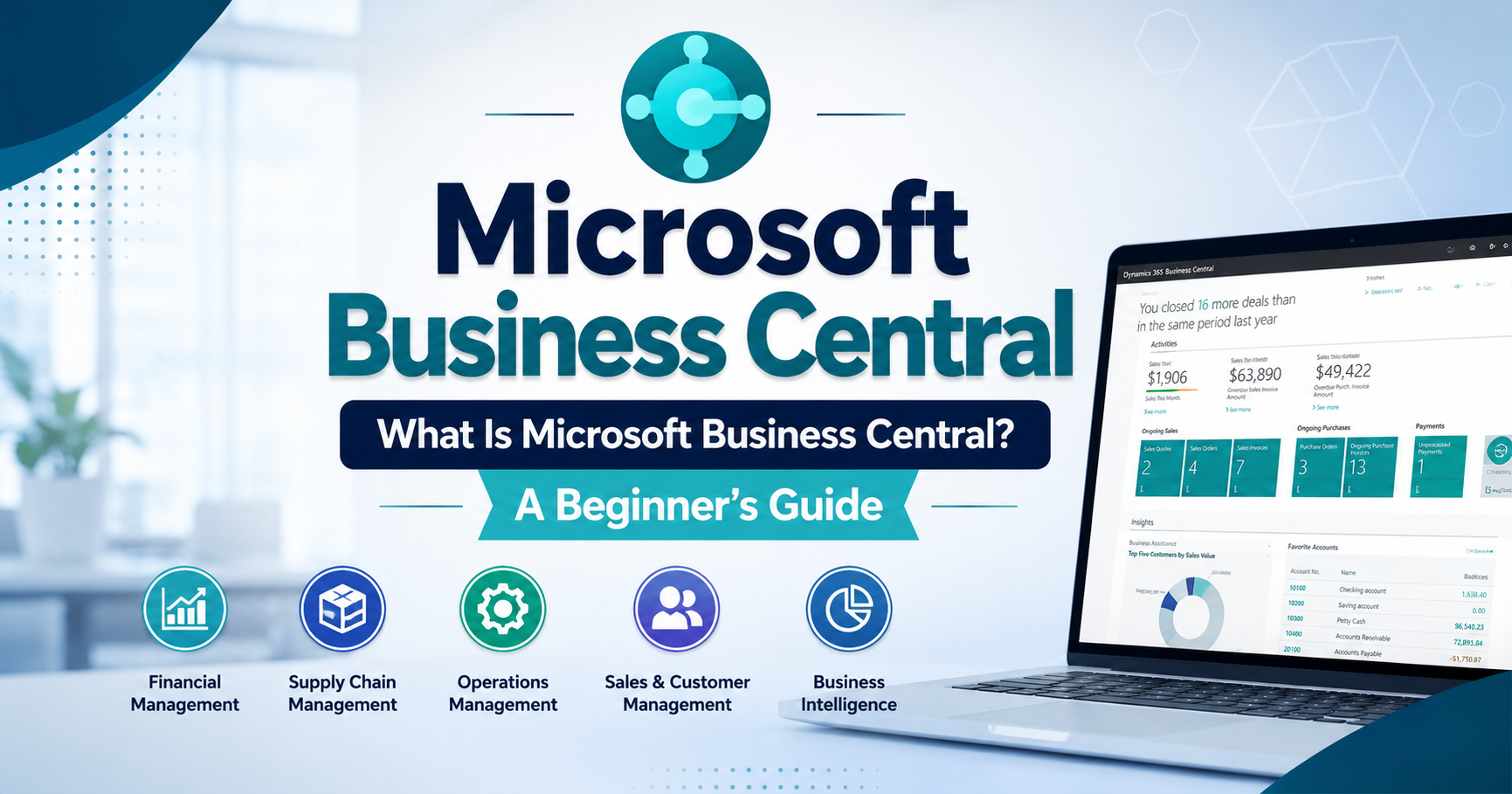
What Is Microsoft Business Central? A Beginner’s Guide

Introduction

Businesses today need efficient ways to manage finances, sales, inventory, operations, and customer relationships. Managing these areas with separate tools can create confusion, duplicate data, and unnecessary manual work. This is where Microsoft Business Central can help.

Microsoft Business Central is a cloud-based business management solution designed to help small and medium-sized businesses manage their core operations from one centralized platform. It connects different business processes and provides real-time information that can support better decision-making.

What Is Microsoft Business Central?

Microsoft Business Central is an enterprise resource planning (ERP) solution from Microsoft. It helps businesses manage financial management, sales, purchasing, inventory, supply chain operations, projects, and other important business activities.

Instead of using multiple disconnected systems, businesses can use Microsoft Business Central to bring essential information together. This can make everyday processes more organized, improve visibility, and reduce repetitive administrative work.

The platform can also be customized and expanded as a business grows, making it suitable for companies with changing operational needs.

Key Features of Microsoft Business Central

Financial Management

Financial management is one of the core capabilities of Microsoft Business Central. Businesses can manage general ledgers, accounts payable, accounts receivable, budgets, cash flow, and financial reporting.

By keeping financial information in one system, businesses can gain better visibility into their financial performance and make more informed decisions.

Sales and Customer Management

Microsoft Business Central helps businesses manage sales activities from quotes and orders to invoicing and customer information. Teams can track customer transactions and monitor sales performance more efficiently.

This centralized information can help sales teams understand customer activity and improve their overall workflow.

Inventory and Supply Chain Management

Managing inventory effectively is important for businesses that sell or distribute products. Microsoft Business Central provides tools for tracking inventory levels, purchasing, warehouse activities, and product movements.

Businesses can use this information to improve inventory visibility and reduce problems caused by insufficient or excessive stock.

Project Management

Businesses that handle projects can use Microsoft Business Central to manage project-related tasks, resources, budgets, costs, and billing. This helps organizations keep project information organized and monitor performance more effectively.

Benefits of Using Microsoft Business Central

Centralized Business Information

One major benefit of Microsoft Business Central is that it brings important business data together. Employees can access relevant information from a centralized system instead of switching between multiple applications.

This can improve collaboration and help teams work with more consistent information.

Improved Productivity

Automation can reduce repetitive manual tasks such as data entry, reporting, and routine financial processes. Employees can spend more time on important business activities instead of handling administrative work.

Better Decision-Making

Businesses need accurate information to make good decisions. Microsoft Business Central provides reporting and business insights that can help managers understand financial performance, sales activity, inventory, and other operational areas.

Scalability

As a business grows, its processes and data requirements can become more complex. Microsoft Business Central is designed to support growing organizations by providing features that can adapt to changing business requirements.

Who Can Use Microsoft Business Central?

Small and Medium-Sized Businesses

Microsoft Business Central is particularly useful for small and medium-sized businesses that need a comprehensive business management system without managing several disconnected applications.

It can support organizations across industries such as manufacturing, retail, professional services, distribution, and other business sectors.

Growing Organizations

Companies experiencing growth may find it useful when their existing spreadsheets or basic accounting systems are no longer sufficient. Microsoft Business Central can provide a more structured way to manage expanding operations.

How Does Microsoft Business Central Work With Microsoft Tools?

Microsoft 365 Integration

Microsoft Business Central can work with familiar Microsoft products and services. This can help employees connect business information with everyday productivity tools and create smoother workflows.

Integration with Microsoft technologies can also make it easier for organizations already using the Microsoft ecosystem to adopt a centralized business management solution.

Is Microsoft Business Central Easy to Use?

User-Friendly Business Management

Microsoft Business Central is designed with business users in mind. Its interface provides access to different business functions while allowing organizations to configure processes according to their requirements.

However, successful implementation usually requires proper planning, data preparation, configuration, training, and user adoption.

Conclusion

Microsoft Business Central is a powerful ERP and business management solution that helps organizations manage financial operations, sales, inventory, purchasing, projects, and other essential processes in one connected environment. By centralizing information and supporting automation, it can help businesses improve productivity, visibility, and decision-making.

For growing businesses looking to move beyond spreadsheets or disconnected systems, Microsoft Business Central can provide a flexible foundation for managing operations more efficiently. With the right implementation strategy and user training, businesses can use the platform to create more streamlined and organized workflows.

Business Central
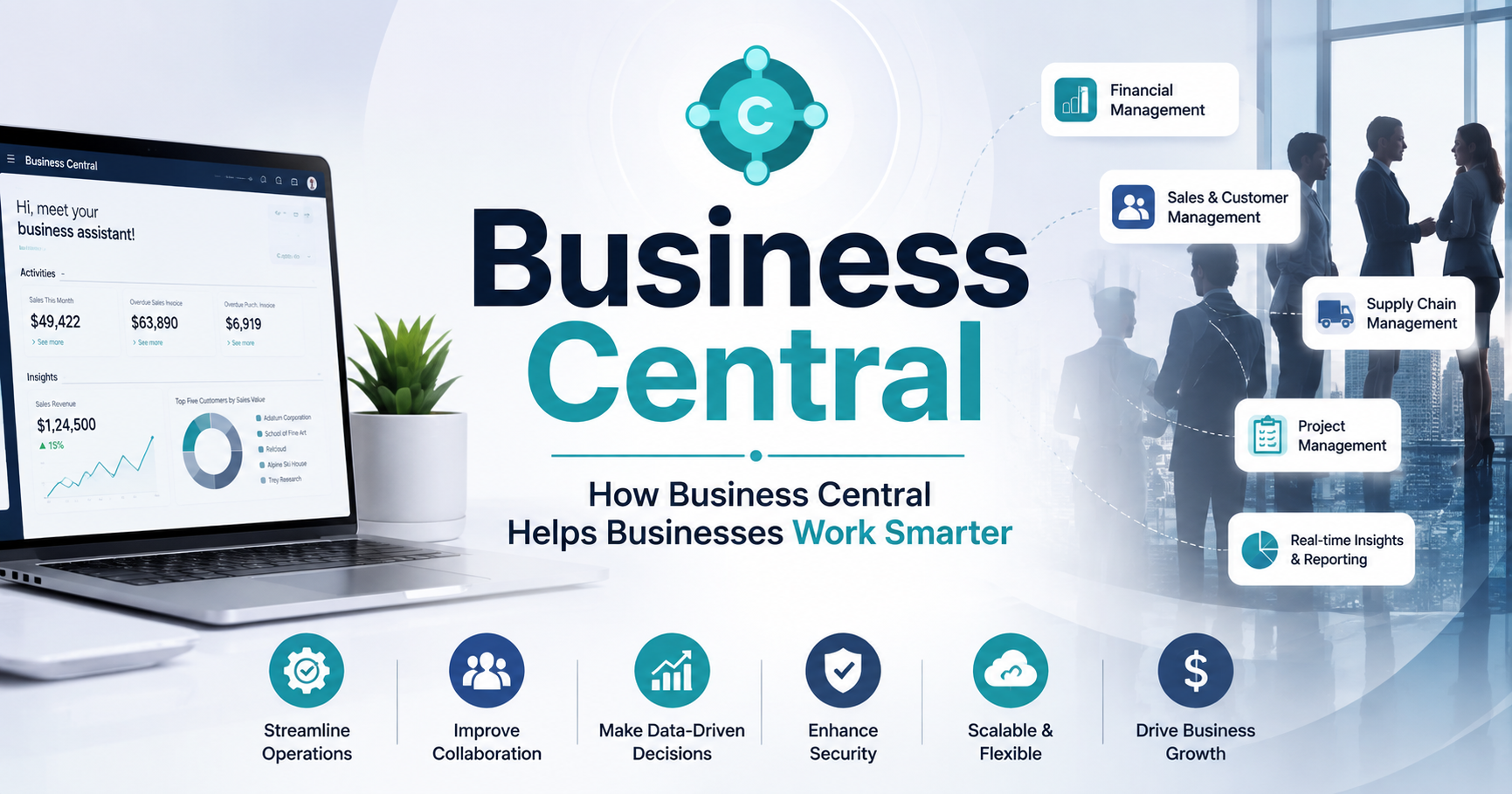
How Business Central Helps Businesses Work Smarter

In today’s competitive business environment, companies need more than basic accounting or inventory tools to stay efficient. They need a connected solution that helps teams manage finances, customers, operations, sales, and supply chains from one place. Business Central is designed to help small and mid-sized businesses simplify daily processes, improve decision-making, and work more efficiently.

As a Microsoft business management solution, Business Central brings essential business functions together in a single platform. By reducing manual work and providing real-time insights, it allows businesses to focus more on growth and less on administrative tasks.

What Is Business Central?

Business Central is a cloud-based enterprise resource planning (ERP) solution from Microsoft. It helps businesses manage core operations such as financial management, sales, purchasing, inventory, projects, and supply chain activities.

Instead of using separate systems for different departments, businesses can use Business Central to connect important processes. This creates a centralized flow of information and makes it easier for employees to access accurate data.

How Business Central Helps Businesses Work Smarter

1. Centralizes Business Data

One of the biggest advantages of Business Central is that it brings business information into one connected system. Finance, sales, purchasing, inventory, and other teams can work with the same data.

A centralized system reduces the need to maintain multiple spreadsheets and disconnected applications. Employees can find important information faster and collaborate more effectively.

2. Automates Repetitive Tasks

Manual data entry and repetitive administrative work can consume valuable time. Business Central helps automate many routine processes, including invoicing, financial reporting, purchasing workflows, and inventory management.

Automation can also reduce the risk of human errors. Employees can spend less time on repetitive tasks and more time on activities that contribute to business growth.

3. Improves Financial Management

Accurate financial information is essential for making smart business decisions. Business Central provides tools for managing budgets, accounts payable, accounts receivable, cash flow, and financial reporting.

With better visibility into financial performance, businesses can monitor expenses, understand profitability, and identify potential financial issues earlier.

4. Provides Real-Time Business Insights

Making decisions based on outdated information can create unnecessary risks. Business Central helps businesses access current operational and financial information.

Managers can use dashboards, reports, and analytics to understand business performance and identify trends. This supports faster and more informed decision-making.

5. Simplifies Inventory and Supply Chain Management

Inventory problems can lead to increased costs, delayed orders, or unhappy customers. Business Central helps businesses monitor inventory levels, manage purchasing, and track products throughout their operations.

Better inventory visibility can help companies maintain appropriate stock levels while avoiding unnecessary overstocking or shortages.

6. Supports Sales and Customer Management

Business Central also helps businesses manage sales processes and customer information. Teams can track orders, invoices, customer interactions, and sales performance from a connected system.

Having access to relevant customer and sales information helps employees respond faster and provide a more consistent customer experience.

7. Enables Business Growth

As a business grows, its processes and data requirements become more complex. Business Central provides a scalable platform that can support changing business needs.

Companies can also integrate Business Central with other Microsoft tools and third-party applications to create a more connected technology environment.

Why Choose Business Central?

Businesses choose Business Central because it combines essential ERP capabilities with automation, reporting, integration, and cloud accessibility. It can help organizations reduce operational complexity while giving employees the tools they need to work productively.

By connecting departments and improving access to information, Business Central can create a more efficient and collaborative workplace.

Frequently Asked Questions

What is Business Central used for?

Business Central is used to manage business operations such as finance, sales, purchasing, inventory, supply chain management, and projects through one integrated ERP platform.

Is Business Central suitable for small businesses?

Yes. Business Central is designed particularly for small and mid-sized businesses that need stronger financial and operational management without maintaining multiple disconnected systems.

How does Business Central improve productivity?

It improves productivity by connecting business data, automating repetitive processes, reducing manual entry, and giving employees faster access to important information.

Is Business Central cloud-based?

Yes. Business Central is available as a cloud-based solution, allowing authorized users to access business information and processes from supported devices and locations.

Can Business Central integrate with other Microsoft products?

Yes. Business Central can integrate with various Microsoft products and services, helping businesses create a connected digital workplace.

Conclusion

Working smarter means having the right information, processes, and tools available when they are needed. Business Central helps businesses achieve this by bringing financial and operational activities together, automating routine tasks, improving visibility, and supporting better decisions.

For growing businesses looking to simplify operations and build a more connected organization, Business Central can provide a strong foundation for improving efficiency and supporting long-term growth.

Microsoft Dynamics 365
Microsoft Dynamics 365 Business Central: A Complete Guide

Microsoft Dynamics 365 Business Central is a cloud-based business management solution designed for small and mid-sized businesses. It brings essential business processes such as finance, sales, purchasing, inventory, project management, and operations into one connected platform.

Instead of managing business information across multiple disconnected applications, companies can use Microsoft Dynamics 365 Business Central to centralize their data and automate everyday processes. Because it is part of the Microsoft Dynamics 365 ecosystem, it can also work with other Microsoft tools and services.

Key Features of Microsoft Dynamics 365 Business Central

Microsoft Dynamics 365 Business Central provides a wide range of features that help businesses manage operations efficiently.

1. Financial Management

Businesses can manage general accounting, accounts payable, accounts receivable, budgets, cash flow, and financial reporting. Real-time financial information can help management make better business decisions.

2. Sales and Customer Management

The platform helps businesses manage customer information, sales opportunities, quotes, orders, invoices, and customer interactions. This makes it easier for sales teams to track the complete sales process.

3. Inventory Management

Companies can monitor inventory levels, product movements, stock availability, and purchasing requirements. This can help reduce inventory errors and improve supply planning.

4. Purchasing Management

Business Central helps organizations manage vendors, purchase orders, receipts, invoices, and supplier-related processes. Automation can reduce repetitive administrative work.

5. Project Management

Businesses can track projects, resources, budgets, costs, and project-related activities. This is useful for organizations that need better visibility into project performance and profitability.

Benefits of Microsoft Dynamics 365 Business Central

One of the biggest advantages of Microsoft Dynamics 365 Business Central is that it connects different areas of a business through a single system.

Improved Productivity

Automation reduces repetitive tasks and allows employees to spend more time on important business activities.

Better Business Visibility

Centralized data provides businesses with a clearer view of financial performance, sales, inventory, and operations.

Scalability

As a company grows, its business management requirements also change. Business Central can support organizations as they expand their operations and processes.

Cloud-Based Access

Because Business Central is available as a cloud solution, authorized users can access business information from supported devices and locations without relying solely on an on-premises system.

Integration With Microsoft Tools

Businesses can connect Business Central with other Microsoft services and applications, helping employees work with familiar tools and business data.

How Does Microsoft Dynamics 365 Business Central Work?

Business Central connects different business functions through a centralized database and integrated workflows. For example, when a customer places an order, information can flow through sales, inventory, shipping, invoicing, and financial processes.

This connected approach reduces duplicate data entry and gives employees access to more consistent information. Companies can also configure workflows and use automation to streamline routine processes.

Who Should Use Microsoft Dynamics 365 Business Central?

Microsoft Dynamics 365 Business Central is particularly useful for small and medium-sized businesses that have outgrown basic accounting software or multiple disconnected business applications.

It can be suitable for industries such as manufacturing, distribution, professional services, retail, and other organizations that need integrated financial and operational management.

Why Choose Microsoft Dynamics 365 Business Central?

Choosing the right business management platform can help organizations improve efficiency and make informed decisions. Business Central combines financial management, sales, purchasing, inventory, projects, and operations in one solution.

Its integration capabilities, automation features, reporting tools, and scalability make it a practical option for businesses looking to modernize their business management processes.

Frequently Asked Questions

What is Microsoft Dynamics 365 Business Central used for?

Microsoft Dynamics 365 Business Central is used to manage core business processes, including finance, sales, purchasing, inventory, projects, and operations, from one integrated platform.

Is Microsoft Dynamics 365 Business Central cloud-based?

Yes. Business Central is available as a cloud-based business management solution, allowing organizations to access their business data and processes through supported devices and services.

Is Business Central suitable for small businesses?

Yes. Business Central is designed primarily for small and medium-sized businesses that need more advanced capabilities than basic accounting or disconnected business applications can provide.

What is the difference between Business Central and Dynamics 365?

Dynamics 365 is Microsoft’s broader family of business applications. Microsoft Dynamics 365 Business Central is the business management and ERP solution within that ecosystem, while other Dynamics 365 applications focus on areas such as sales, customer service, and other business functions.

Can Business Central integrate with Microsoft applications?

Yes. Business Central can integrate with various Microsoft services and applications, helping businesses connect their data and workflows across their technology environment.

Conclusion

Microsoft Dynamics 365 Business Central provides businesses with an integrated way to manage financial, sales, inventory, purchasing, project, and operational activities. By combining business processes, automation, reporting, and connected data in one platform, it can help organizations improve productivity and gain greater visibility into their operations.

For growing businesses looking to replace disconnected systems with a more centralized business management solution, Microsoft Dynamics 365 Business Central can be a strong option for modernizing everyday operations.

Microsoft Dynamics 365
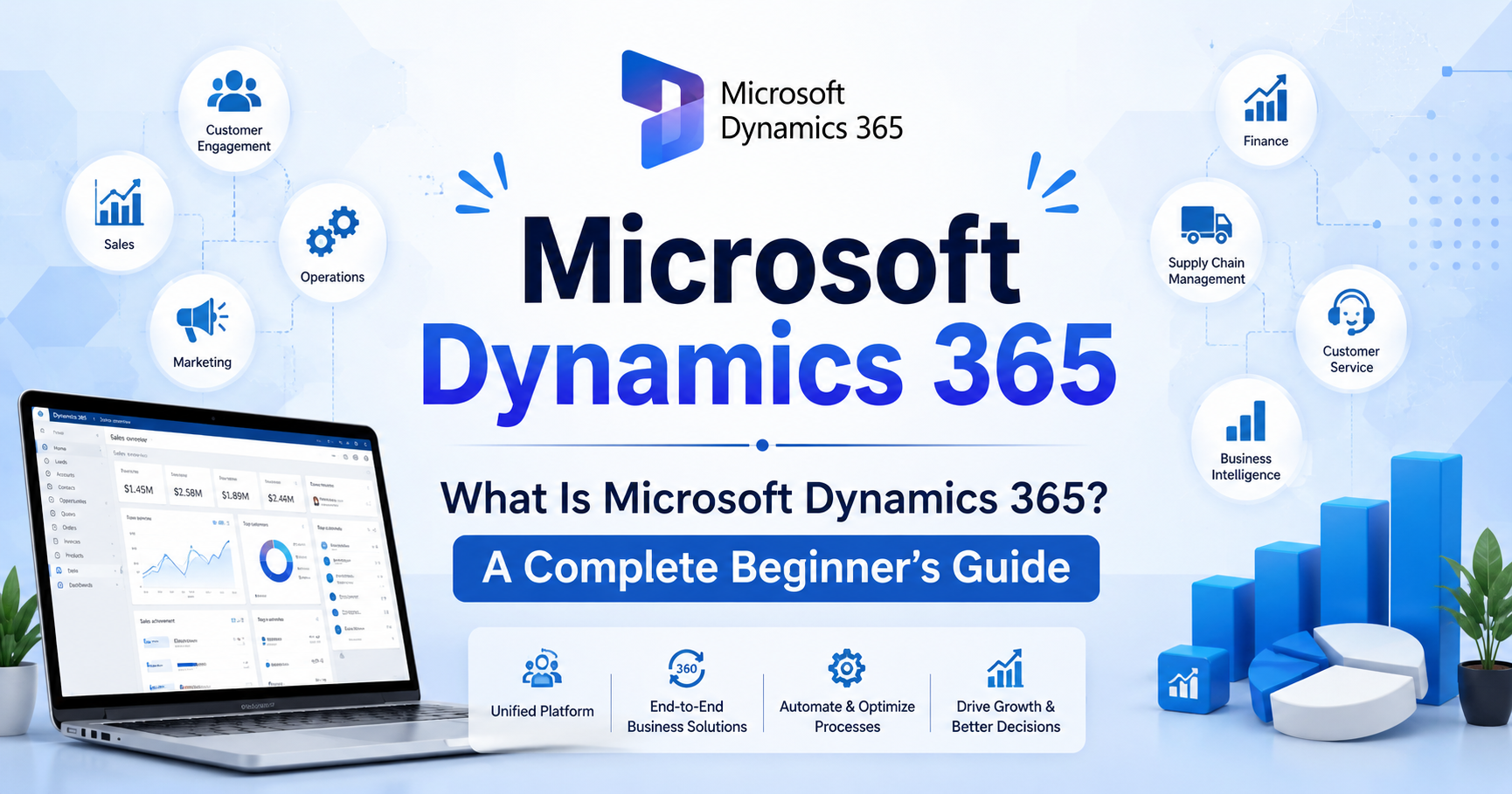
What Is Microsoft Dynamics 365? A Complete Beginner’s Guide

Microsoft Dynamics 365 is a cloud-based suite of business applications designed to help organizations manage customer relationships, sales, customer service, finance, operations, marketing, and other important business processes. By bringing CRM and ERP capabilities together, Dynamics 365 helps businesses connect data, automate repetitive tasks, improve productivity, and make better business decisions.

For beginners, understanding the different applications and features of Microsoft Dynamics 365 can seem complicated. This guide explains what Dynamics 365 is, how it works, its key benefits, major applications, and why businesses use it as a modern Microsoft CRM and business management platform.

What Is Microsoft Dynamics 365?

Microsoft Dynamics 365 is a collection of intelligent cloud-based business applications from Microsoft. It combines customer relationship management (CRM) and enterprise resource planning (ERP) capabilities in a connected platform.

Instead of using separate systems for sales, customer service, finance, and operations, businesses can use different Dynamics 365 applications that work together and share business information.

For example, a sales representative can use Dynamics 365 to manage leads and opportunities. Once a customer makes a purchase, relevant information can be connected with customer service, finance, and other business processes.

In simple terms, Microsoft Dynamics 365 helps businesses manage customer relationships and internal operations from an integrated technology ecosystem.

What Is Dynamics 365 CRM?

Dynamics 365 CRM refers to the customer relationship management applications within the Dynamics 365 ecosystem. CRM software helps businesses manage interactions with existing and potential customers.

A Dynamics 365 CRM solution can help teams:

  • Store and organize customer information
  • Track leads and prospects
  • Manage sales opportunities
  • Monitor customer interactions
  • Automate sales activities
  • Provide customer support
  • Analyze customer data
  • Improve customer engagement

For example, a company receiving hundreds of inquiries can use Dynamics 365 CRM to record customer information, assign leads to sales representatives, track conversations, and monitor the progress of each opportunity.

This makes it easier for sales and service teams to understand customers and provide more personalized experiences.

Is Microsoft Dynamics 365 a CRM or ERP?

One of the most common questions beginners ask is: Is Microsoft Dynamics 365 a CRM or an ERP?

The answer is both.

Microsoft offers Dynamics 365 applications for CRM-related functions such as sales and customer service, as well as ERP-related functions such as finance and supply chain management.

CRM applications primarily focus on customers, sales, marketing, and service. ERP applications focus more on financial management, supply chains, operations, inventory, and other internal business processes.

Because these applications can work together, organizations can create a connected business environment rather than relying on completely separate systems.

Key Microsoft Dynamics 365 Applications

The Microsoft Dynamics 365 ecosystem includes multiple applications designed for different business needs. The exact applications a company uses depend on its industry, size, processes, and goals.

1. Dynamics 365 Sales

Dynamics 365 Sales helps sales teams manage the complete sales process.

Businesses can use it to:

  • Manage leads and contacts
  • Track sales opportunities
  • Manage accounts
  • Monitor customer interactions
  • Automate sales activities
  • Analyze sales performance
  • Improve sales forecasting

For sales teams, this can provide a centralized view of prospects and customers.

2. Dynamics 365 Customer Service

Dynamics 365 Customer Service is designed to help organizations manage customer support and service operations.

It can help businesses organize customer cases, track service requests, provide relevant customer information to support agents, and improve the overall customer experience.

A centralized customer record can help support teams understand previous interactions before responding to a customer.

3. Dynamics 365 Customer Insights

Customer Insights helps organizations understand customer data and behavior.

Businesses can use customer information from different sources to develop a more complete view of their audiences. This can support personalized marketing, customer engagement, and data-driven decision-making.

4. Dynamics 365 Finance

Dynamics 365 Finance provides tools for managing financial processes.

It can support areas such as:

  • Financial planning
  • Accounting
  • Budgeting
  • Financial reporting
  • Cash flow management
  • Compliance processes

Organizations can use financial data to better understand business performance and support strategic decisions.

5. Dynamics 365 Supply Chain Management

Supply Chain Management is designed for organizations that need to manage supply chain and operational processes.

It can help businesses manage areas such as inventory, procurement, logistics, manufacturing, and supply chain planning.

This is particularly useful for organizations that need greater visibility into products, inventory, suppliers, and operational processes.

How Does Microsoft Dynamics 365 Work?

So, how does Microsoft Dynamics 365 work?

At a basic level, Dynamics 365 connects business applications, customer information, processes, and data within Microsoft’s cloud ecosystem.

A business can select the applications it needs instead of implementing every available application.

For example:

Sales team → Dynamics 365 Sales → Customer data → Customer service → Finance

When these processes are connected, teams can work with more consistent information and reduce the need to manually move data between disconnected systems.

Dynamics 365 can also integrate with other Microsoft technologies, including Power Platform and Microsoft 365, depending on the organization’s requirements and configuration.

Key Benefits of Microsoft Dynamics 365

Businesses choose Microsoft Dynamics 365 for several reasons. Some of the major benefits include:

Centralized Business Data

Dynamics 365 can bring important customer and business information into connected applications. This makes it easier for employees to find and use relevant information.

Improved Productivity

Automation can reduce repetitive manual tasks. Sales and service teams can spend more time on customers instead of performing unnecessary administrative work.

Better Customer Relationships

With a centralized customer view, employees can understand customer interactions, preferences, activities, and service history more effectively.

Data-Driven Decisions

Organizations can use reports, dashboards, analytics, and business data to identify trends and make more informed decisions.

Scalability

Businesses can select applications based on their needs and expand their technology environment as their requirements change.

Microsoft Ecosystem Integration

For organizations already using Microsoft products, Dynamics 365 can work within a broader Microsoft technology ecosystem, helping connect business applications and data.

Microsoft Dynamics 365 vs Microsoft CRM

Another common question is the difference between Microsoft CRM and Dynamics 365.

Microsoft CRM is often used as a general term to describe Microsoft’s customer relationship management software. Today, Microsoft’s CRM capabilities are primarily delivered through Dynamics 365 applications such as Dynamics 365 Sales and Dynamics 365 Customer Service.

Therefore, when someone searches for Microsoft CRM, they may actually be looking for Dynamics 365 CRM.

The important distinction is that Dynamics 365 is broader than CRM alone. It includes both CRM-focused and ERP-focused business applications.

Who Should Use Dynamics 365?

Microsoft Dynamics 365 can be useful for businesses of different sizes and industries.

It may be particularly valuable for organizations that need to:

  • Manage a large customer database
  • Improve sales processes
  • Automate business workflows
  • Connect departments
  • Improve customer service
  • Manage financial operations
  • Track supply chain activities
  • Analyze business performance

Industries that may use Dynamics 365 include retail, manufacturing, professional services, healthcare, financial services, education, and many other sectors.

However, the right solution depends on business requirements, budget, existing technology, and implementation needs.

What Are the Main Features of Dynamics 365 CRM?

The exact features available depend on the Dynamics 365 application and configuration, but common CRM capabilities include:

  • Contact and account management
  • Lead management
  • Opportunity management
  • Sales pipeline tracking
  • Customer service management
  • Case management
  • Workflow automation
  • Reporting and analytics
  • Customer data management
  • Integration capabilities

These features help organizations create more structured and measurable customer-facing processes.

How Can Businesses Get Started With Microsoft Dynamics 365?

Businesses considering Dynamics 365 should begin by identifying their specific business requirements.

A simple implementation process can include:

Step 1: Identify business challenges

Determine which processes need improvement, such as sales management, customer service, finance, or supply chain operations.

Step 2: Select the appropriate application

Choose the Dynamics 365 application or combination of applications that matches those requirements.

Step 3: Plan data and integrations

Determine what existing customer and business data needs to be migrated and which systems need to connect with Dynamics 365.

Step 4: Configure the platform

Configure workflows, fields, dashboards, permissions, and other features based on business processes.

Step 5: Train employees

Employees should understand how the system works and how it supports their daily responsibilities.

Step 6: Monitor performance

After implementation, organizations should regularly evaluate adoption, data quality, productivity, and business results.

Frequently Asked Questions About Microsoft Dynamics 365

What is Microsoft Dynamics 365 used for?

Microsoft Dynamics 365 is used to manage customer relationships and business operations. Depending on the applications selected, businesses can use it for sales, customer service, finance, supply chain management, customer insights, and other processes.

Is Dynamics 365 a CRM?

Yes. Dynamics 365 includes CRM applications such as Dynamics 365 Sales and Dynamics 365 Customer Service. However, Dynamics 365 is broader than a traditional CRM because it also includes ERP-focused applications.

Is Microsoft Dynamics 365 cloud-based?

Yes. Microsoft offers Dynamics 365 as cloud-based business applications. Cloud deployment can provide access to business applications and data without requiring organizations to maintain all of the underlying infrastructure themselves.

What is Dynamics 365 CRM?

Dynamics 365 CRM refers to the customer relationship management capabilities within the Dynamics 365 ecosystem. It helps businesses manage customers, leads, opportunities, sales activities, and service interactions.

Is Microsoft CRM the same as Dynamics 365?

Microsoft CRM is commonly used as a general term for Microsoft’s CRM solutions. Today, many of Microsoft’s CRM capabilities are provided through Dynamics 365 applications.

Is Dynamics 365 suitable for small businesses?

Dynamics 365 can be used by businesses of different sizes. Whether it is suitable for a small business depends on its requirements, budget, processes, number of users, and desired functionality.

Final Thoughts

Microsoft Dynamics 365 is more than traditional CRM software. It is a connected suite of business applications that can help organizations manage customer relationships, sales, service, finance, operations, and other business processes.

For businesses looking for a modern Microsoft CRM solution, Dynamics 365 CRM provides tools for managing customer information, sales activities, service interactions, and business insights. Organizations can also combine CRM applications with ERP capabilities to create a more connected technology environment.

The best approach is to first identify your business requirements and then select the Dynamics 365 applications that provide the functionality your organization actually needs.